
Written by

Topics
What if play isn’t just something children need?
What if it’s one of the most important capacities we have as human beings?
As educators transition into summer, many find themselves moving from months of constant activity into a season of unexpected space.
And while that space can feel restorative, it can also feel uncomfortable. Without lesson plans, meetings, and endless to-do lists, many educators are left asking:
What do I do now?
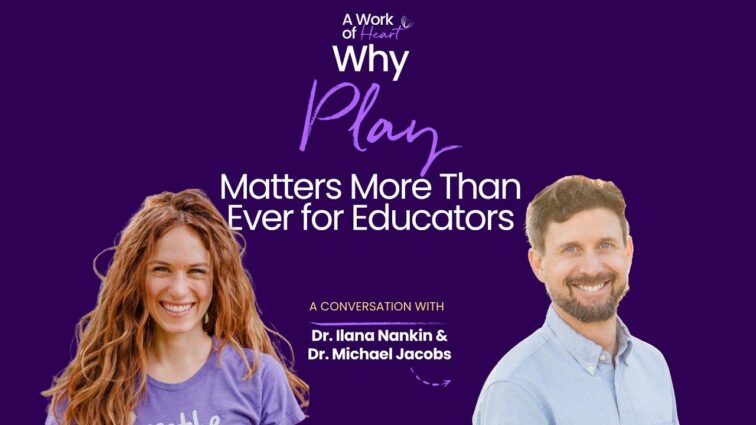
In this thought-provoking conversation, Dr. Ilana Nankin sits down with neuroscientist, psychiatrist, and cousin Dr. Michael Jacob to explore the neuroscience of play, creativity, imagination, and possibility.
Together, they examine why play is far more than a childhood activity, how it has shaped human evolution, and why creating space for wonder, curiosity, and exploration may be essential for our well-being.
They also explore what makes us uniquely human in an age of artificial intelligence and why creativity, compassion, imagination, and purpose remain at the heart of education.
Here are some of the best moments from the episode:
- Why Summer Can Feel Surprisingly Difficult for Educators
- The Biological Importance of Rest and Recovery
- Michael’s Powerful Definition of Play as “Possibility”
- What Neuroscience Teaches Us About Creativity and Imagination
- The Connection Between Play and Mental Health
- Why Curiosity and Wonder Matter for Learning
- What Separates Human Intelligence From Artificial Intelligence
- How Educators Can Create More Space for Play This Summer
Follow “A Work of Heart” on Spotify, Apple Podcasts, or YouTube. Subscribe so you never miss an episode. And if it resonated, take 30 seconds to rate and review. It helps more educators find these conversations and reminds the algorithm that teachers matter.