
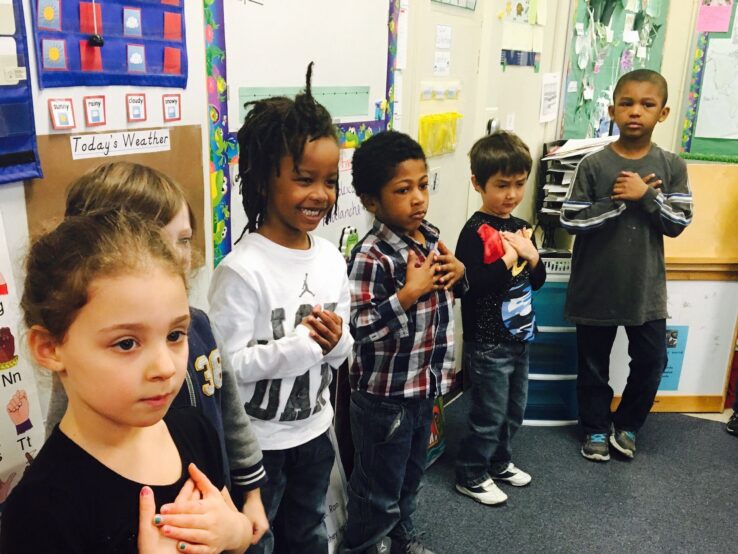
Most gratitude activities for students cover the giving half well. Kids name what they appreciate, write thank-you notes and share with a partner. Then a classmate says something kind to them, and it gets laughed off or waved away before it ever lands. Receiving appreciation is its own skill, and it rarely gets taught on purpose. The five practices below build both halves. The first question is about you, though: what’s your ratio?
Start Here: Check Your Ratio of Appreciation
Couples researcher John Gottman found that in stable marriages, positive behaviors outnumbered negative ones by about five to one, even during conflict discussions (Gottman & Levenson, Journal of Personality and Social Psychology, 1992). Nobody’s tested that ratio in classrooms. It still makes a useful mirror. Here are three small places to start:
- Notice your ratio (2 minutes). Pick one class period and keep a quiet tally of redirections and acknowledgments. Glance at the count afterward.
- Run one peer cheer (3 minutes). The steps are below.
- Offer one effort acknowledgment (30 seconds). Pick a student who’s struggling and name the effort you see.
Gratitude Activities for Students to Run With Each Other
Private gratitude helps on its own. Sixth and seventh graders who counted their blessings for two weeks reported more optimism and life satisfaction, and their greater satisfaction with school held at a three-week follow-up (Froh et al., Journal of School Psychology, 2008). Peer practices give that appreciation somewhere to go. In the Human Intelligence (HI) framework Breathe for Change teaches, this is the Relational layer: connection and belonging, built on purpose.
1. Peer cheer
- What: Partners turn to each other and name one thing they’re proud of the other for today. Everyone gives one and gets one.
- When: The last three minutes of class, or right after partner work while it’s still fresh.
- Why: When adults wrote gratitude letters, the writers underestimated how good recipients would feel and overestimated how awkward it’d be (Kumar & Epley, Psychological Science, 2018). A simple, structured prompt helps students get past that hesitation.
2. Shower of acknowledgment
- What: One student sits in the center while classmates call out single words that describe them, like courageous, bold, funny, or a leader. Dr. Ilana Nankin, co-founder and co-CEO of Breathe for Change, calls it “a game changer.”
- When: Once a week for a student of the week, or after a milestone that matters to them. With a big class, rotate through groups of 5 to 10 so everyone gets a turn.
- Why: The giver benefits too. Adults who gave compliments felt better afterward, and they’d underestimated how much the recipient would enjoy it (Boothby & Bohns, Personality and Social Psychology Bulletin, 2021).
Two Ways You Can Model Appreciation Yourself
3. Acknowledge effort, not outcome
- What: Find a one-on-one moment and name the work you see. Here’s Dr. Ilana’s script: “I see how hard you’re working on this. That’s incredible. That’s a skill that’s going to serve you for the rest of your life.”
- When: During independent work, especially with a student whose grades don’t show the effort. As Dr. Ilana puts it, this applies “even if they’re failing.”
- Why: If a student has only ever heard about their grades, they may have decided they’re a failure. When someone names their effort, they’ve got evidence against that inner critic. Classroom affirmation posters keep the same language on the wall between conversations.
4. Acknowledge the whole class
- What: Tell the group something they’re doing well and why it matters to you, like “the way that you’re listening to each other is really inspiring me.”
- When: Right after a discussion or transition goes well.
- Why: It shifts the ratio for everyone at once. Students also get to hear what appreciation sounds like before you ask them to offer any.
How to Teach Students to Receive Appreciation
5. Let appreciation land
Sam Levine, a Breathe for Change faculty member who taught secondary students, noticed that appreciation among teenagers “could quickly turn into a joke.” He calls receiving the skill nobody names out loud. A student hears something kind, decides it can’t be true about them, and blocks it.
- What: Teach a receiving norm. Pause, let the words register, and say “thank you” without deflecting or cracking a joke.
- When: Before your first peer cheer or shower, and again any time someone deflects.
- Why: Research on adults in romantic relationships suggests people with low self-esteem tend to resist compliments, and feel more secure after reflecting on why a compliment means they’re valued (Marigold, Holmes & Ross, Journal of Personality and Social Psychology, 2007). A follow-up like “What do you think they saw in you?” opens the door to that reflection. Afterward, a two-word check-in gives students a quick way to say how it felt.
Frequently Asked Questions About Gratitude Activities for Students
What are gratitude activities for students?
They’re short, structured practices that help students notice, express and accept appreciation. The strongest ones build two skills: giving appreciation (a peer cheer, a shower of acknowledgment) and receiving it (pausing and saying “thank you” without deflecting).
How do you teach students to accept compliments?
Call receiving a skill before anyone practices it. Set a simple norm: pause, let the words register, say “thank you.” If a student deflects, ask, “What do you think they saw in you?” and give them a moment to answer.
How long do gratitude activities take?
Most take under five minutes. A peer cheer fits in the last three minutes of class. An effort acknowledgment takes about 30 seconds.
How often should you do gratitude activities in class?
Quick practices like peer cheers and effort acknowledgments can happen daily. Longer ones, like the shower of acknowledgment, work well once a week.
Back to Your Ratio
Each of these takes a few minutes at most, and together they cover giving and receiving. That groundwork is what makes repair after classroom conflict possible later on. For more ideas, try these 15 classroom community building activities. Next time you tally your ratio, add one more column: how many of those acknowledgments your students actually let in.
These practices come from the William Jewell College Master’s of Science in Education (M.S.Ed.) in Transformative Teaching & Learning, offered in partnership with Breathe for Change. Dr. Ilana says teaching them is one of her favorite parts of the program: “I’ve seen tens of thousands of educators implement them in their classrooms.” William Jewell College, an HLC-accredited institution, awards the degree. The M.S.Ed. is FAFSA-eligible, and a $250 deposit holds your spot. Learn more about the M.S.Ed.
Want to go deeper? Listen to the full conversation between Dr. Ilana Nankin and Sam Levine on A Work of Heart, the Breathe for Change podcast. They cover the peer cheer, the shower of acknowledgment, Gottman’s five-to-one ratio, and why gratitude and repair belong together.