Written by

Topics
Election season has a way of walking into the classroom uninvited. A student repeats something from the dinner table, a classmate’s face falls, and the whole room turns to see what the adult will do next. For many educators, silence has started to feel like the only safe option.
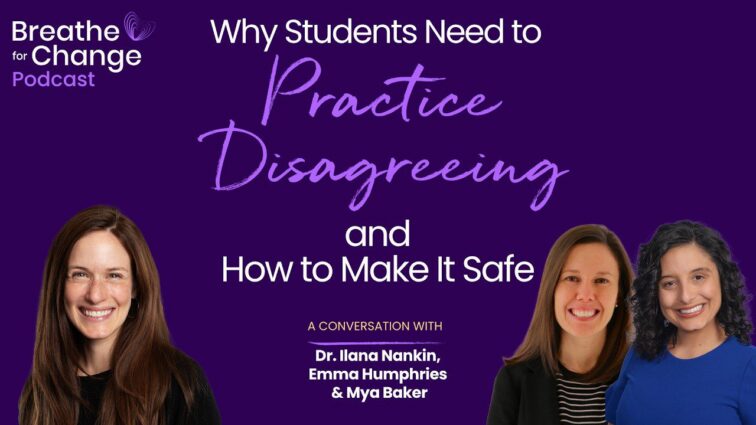
Dr. Ilana Nankin, Dr. Emma Humphries, and Mya Baker of iCivics make the case that avoidance costs students far more than it spares them. The conversation still happens. It just moves into feeds built to confirm what students already believe, where no one teaches them to listen to someone who sees it differently.
What works instead is preparation, not bravery. Build Community Agreements early, define them as actual behaviors, and keep them on the wall. Trade verdicts for questions, so students weigh what a president should be able to do, not whether one person was right. When a comment lands hard, a pause and an invitation to try again protect the student who was hurt without shaming the one who spoke. Before it begins, 3 Collective Breaths and a one-word Intention Setting help the room arrive settled and choose how to show up.
Underneath every strategy is a question for the adults. Students read a teacher’s nerves before they hear a word, so regulation starts at the front of the room. Educators cannot model curious, open conversation unless leaders model it for them and have their back when a parent writes in. These practices, drawn from the Somatic and Relational layers of the Human Intelligence framework, work in a staff meeting as well as a classroom.
For any educator deciding whether to open the door this election season: you do not need every answer. You only need a room where students can find their own.
Here are some of the best moments from the episode:
- The Cost of Avoiding Hard Conversations
- The Impact of Social Media and Echo Chambers
- How to Create a Safe Space for Disagreement
- Classroom Strategies: Inquiry-Based Learning
- Utilizing Breathing and Intention Setting Practices
- Building Trust with Parents
- How to Handle Hurtful Comments in the Moment
- Co-Creating Classroom Norms and Agreements
Follow “A Work of Heart” on Spotify, Apple Podcasts, or YouTube. Subscribe so you never miss an episode. And if it resonated, take 30 seconds to rate and review. It helps more educators find these conversations and reminds the algorithm that teachers matter.