
Written by

Topics
You know the feeling. Students are wound up, attention spans are evaporating, and the countdown to break feels both too slow and way too fast. You’ve got lessons to wrap, behaviors to manage, and maybe a dessert to bake. (Or at least eat.) In this final stretch, it can feel tempting to tighten control and power through. But what if your nervous system (and your students’) could benefit from the opposite?
This is where co-regulation comes in. Not one more thing to teach, but small moments that help everyone take a breath, settle the energy, and feel just a little more grounded.
These five research-backed practices are quick, classroom-ready, and designed to support calm, connection, and co-regulation without piling on more.
1. Quiet Start
What it is: A silent or low-stimulation opening routine to begin the day.
Why it works: Research shows that predictable routines lower cortisol levels and increase students’ sense of psychological safety (Porges, 2011). The nervous system needs cues of safety to shift out of fight-or-flight and into learning.
Try this: Greet students with calm music, low lighting, and a simple prompt on the board: “Name one thing that feels good today.” Let students journal, color, or sit quietly for 5 minutes. No talking, just arrival.
2. Collective Breathing Breaks
What it is: A 1-minute breathing exercise you do as a class.
Why it works: Intentional breath slows the heart rate, activates the parasympathetic nervous system, and co-regulates the group (Siegel, 2010).
Try this: “Hot Cocoa Breath”: Inhale slowly to smell the cocoa. Exhale gently to cool it down. Repeat 3 times. Let it be playful but embodied.
Bonus: Your students will ask for it next time.
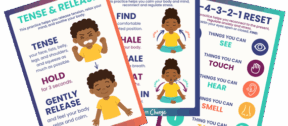
3. Reset Menu
What it is: A small laminated menu of 4-6 self-regulation strategies students can choose from when they’re feeling overwhelmed.
Why it works: Supports autonomy (a core need for motivation), while giving structure to self-regulation. Choice activates the prefrontal cortex, which is linked to emotional control and problem-solving.
What’s on it:
- 1-minute breath break
- Trace a grounding object
- Doodle your feelings
- Walk a lap (if appropriate)
- Write + rip (journal and tear it up)
- Ask for connection
Try This: Put a few menus around the room, in desk folders, or in a central spot. Teach it like you’d teach a routine: model, role-play, revisit.
4. Micro-Movements Between Tasks
What it is: Small, intentional physical movement between lessons or transitions.
Why it works: Movement increases blood flow to the brain, helps release excess energy, and supports regulation (Ratey, 2008).
Try this: “Stretch and Switch”: Stand up, reach arms overhead, fold forward, roll shoulders, then sit and switch to the next task. Do it with them.
5. Friday Gratitude Circle
What it is: A closing routine that centers appreciation.
Why it works: Gratitude boosts dopamine and oxytocin, which improve mood, connection, and resilience (Emmons & McCullough, 2003).
Try this: Sit in a circle. Pass a small object (stone, beanbag) and have each person share one thing they’re grateful for. Model authentic responses: “I’m grateful we made it through this week.”
You don’t need to run a mindfulness program or overhaul your classroom to reset, regulate, and reconnect this season. You just need a few intentional practices that remind your students (and yourself) what safety, presence, and connection feel like.
Human Intelligence lives in these small moments. And this week, those moments matter more than ever.